On this page
The Bottom Line
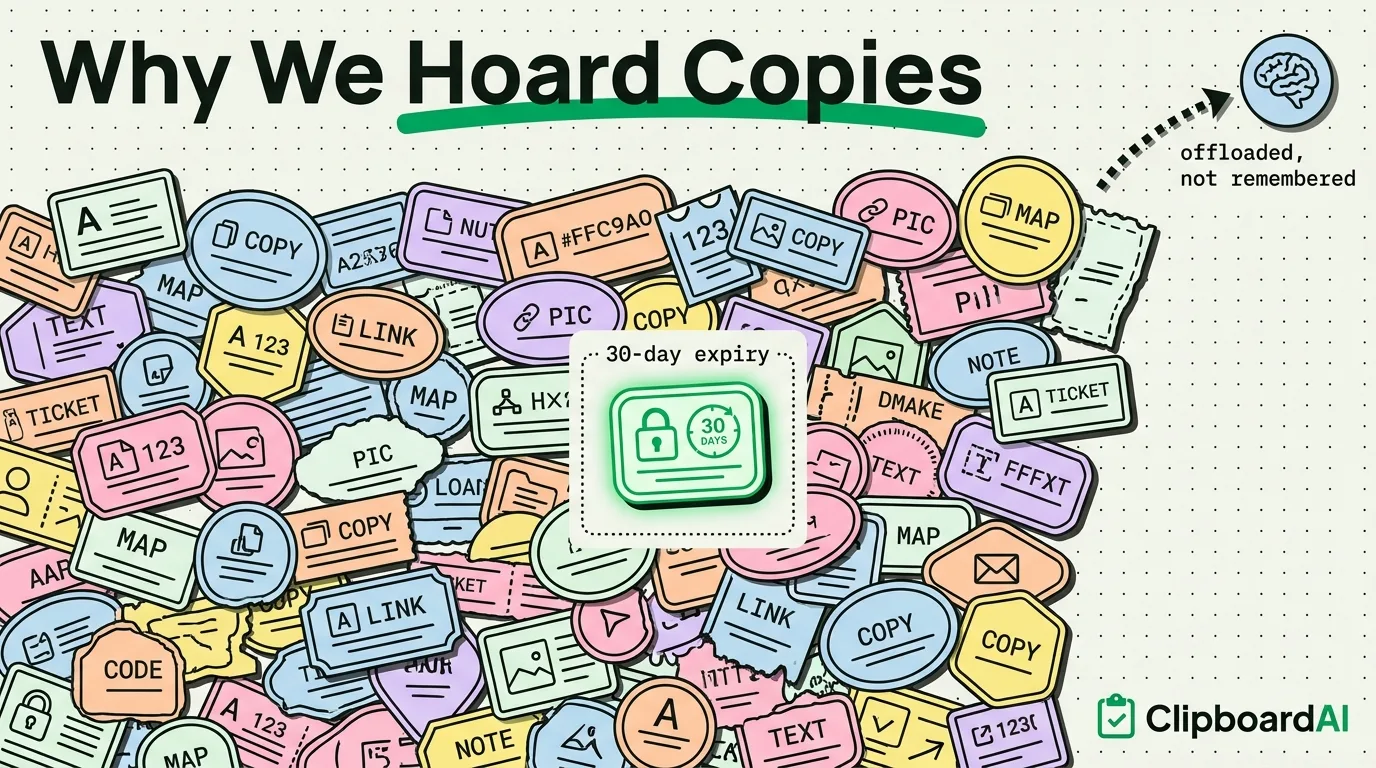
Copying something you will probably never revisit is a form of cognitive offloading: your brain treats "saved somewhere" as functionally equivalent to "handled," even when you never look at it again. This is the same psychological mechanism behind bookmarking articles you'll never read or taking photos of things instead of remembering them. It is not a character flaw or a productivity failure, it is a well-documented tendency to trade internal memory load for external storage, and it happens to be badly served by a clipboard that forgets everything the instant you copy something new.
The Underlying Mechanism: Cognitive Offloading
Cognitive offloading is the use of external tools (notes, photos, bookmarks, clipboard) to reduce the mental burden of holding information in working memory. Research on the "photo-taking impairment effect" (Henkel, 2014, published in Psychological Science) found that people who photographed museum objects instead of just observing them had worse recall of those objects later, the act of externalizing the memory reduced the internal encoding of it. Copy-paste behaves similarly: copying something can feel like "dealing with it," even though the information itself has not been processed or retained, only relocated.
Why Copying Feels Like Less Commitment Than Saving
Bookmarking or saving a note is a deliberate act, you choose a destination, maybe a folder or tag. Copying is nearly frictionless: one gesture, no decision about where it goes. That low friction is exactly why so much gets copied "just in case" and never retrieved, there was no real decision made about whether it mattered, just a reflex to preserve the option.
Where iOS Makes This Worse, Not Better
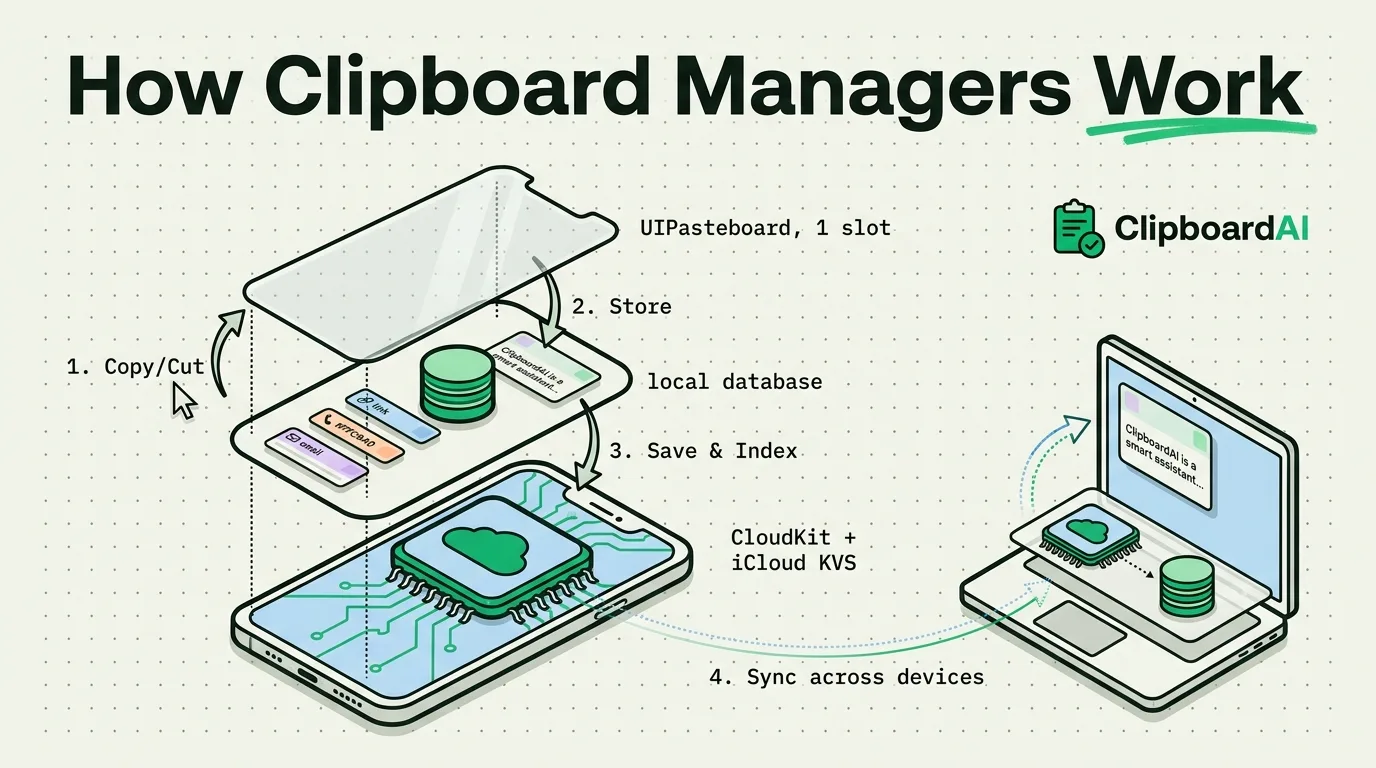
Because iOS's clipboard holds exactly one item, the "just in case" copy is often destroyed within minutes by the next thing you copy, which means the offloading instinct fires constantly but the actual safety net (something you can go back and retrieve) barely exists. You get the mental relief of "I saved it" followed shortly by the reality of "it's gone," which is arguably worse than not copying at all, since the relief was false.
What This Means Practically
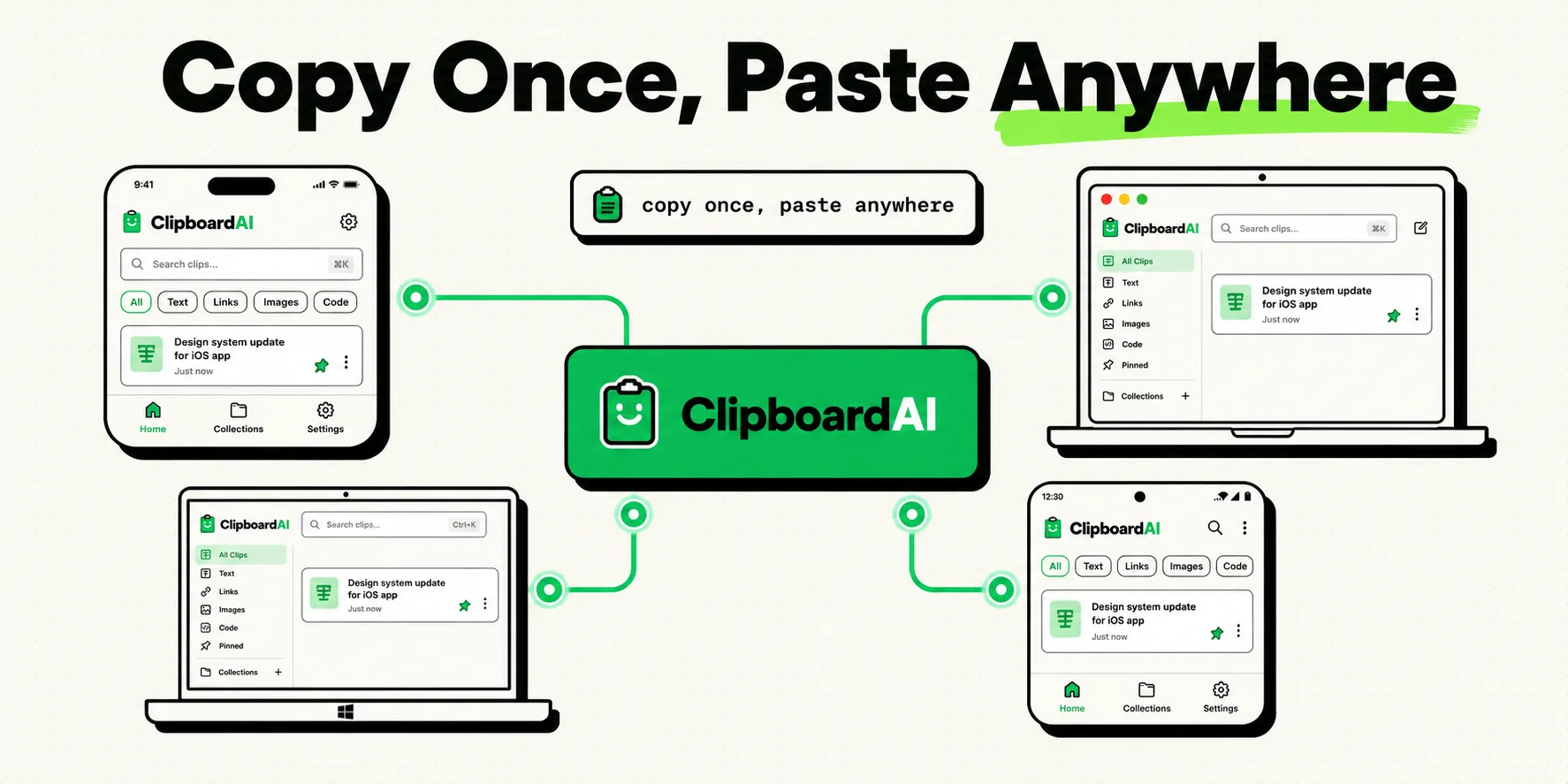
If you recognize this pattern in yourself, two honest options: stop copying things you don't intend to use (a discipline most people won't maintain), or make the offloading instinct actually work by keeping a real history instead of a one-item clipboard. ClipboardAI does the second: everything you copy stays searchable later, so the "saved somewhere" feeling is backed by something retrievable, rather than being erased by your next copy.
This does not fix compulsive hoarding of digital text you will never revisit either, a large searchable pile is still a pile. Setting Auto-Delete Old Clips (30 days up to 1 year) gives the hoarding instinct a natural expiration instead of letting it accumulate forever.
Honest Caveats
This is a psychological tendency, not a diagnosis, and it is not unique to iPhone users or clipboard behavior specifically. The research cited here (cognitive offloading, the photo-taking impairment effect) is about memory and externalization broadly; the clipboard-specific framing here is our own observation applied to that research, not a clipboard-specific study.
Frequently Asked Questions
Is compulsively copying things a sign of anxiety?
Not inherently. It overlaps with general information-hoarding tendencies that researchers link to a fear of losing access to something potentially useful, but copying text on your phone is a mundane, low-stakes version of that broader pattern, not a clinical concern on its own.
Does having a searchable clipboard history make hoarding worse?
It can, since there's no longer a natural limit forcing you to let go of old copies. Pairing history with an auto-delete window (30 days or longer) gives you the retrieval benefit without infinite accumulation.