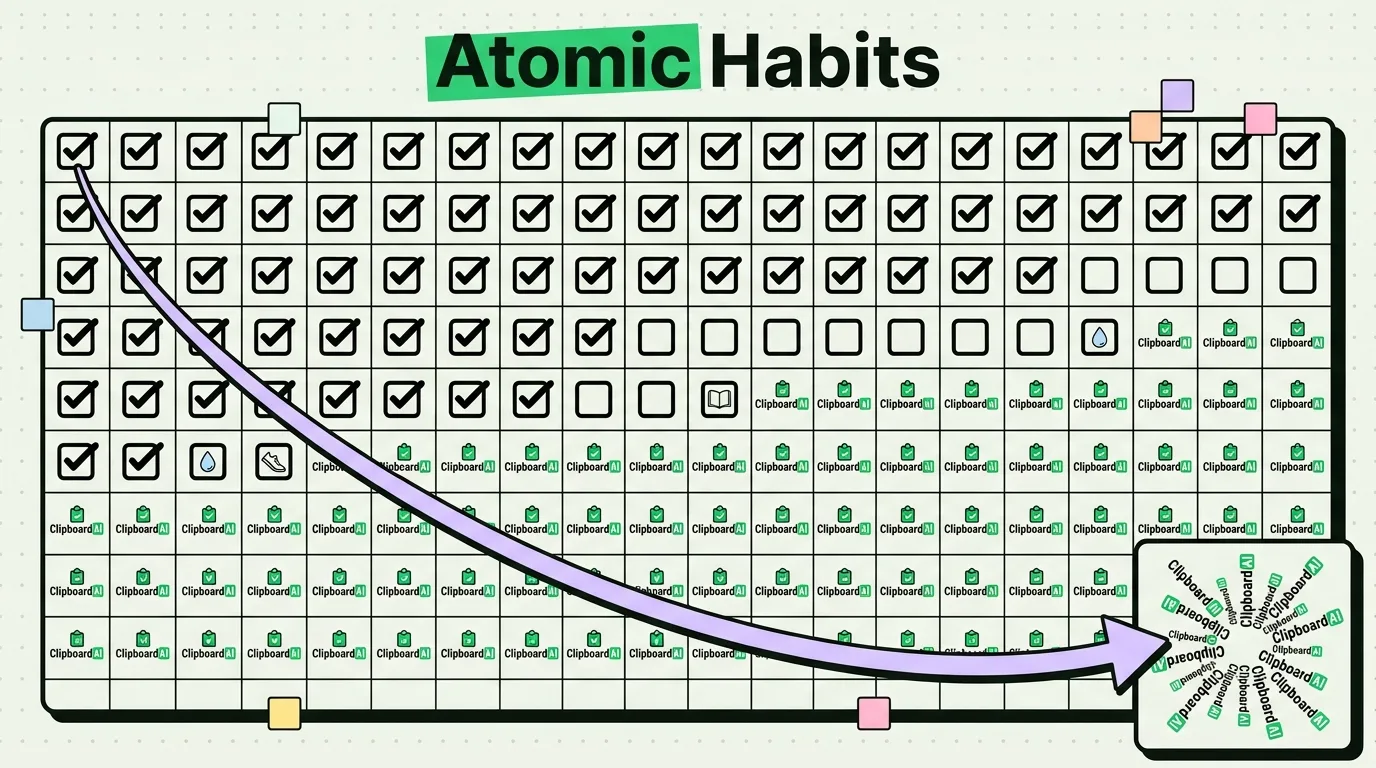
To apply the principles of Atomic Habits to your iPhone, structure your device using friction adjustment: make productive apps obvious and distracting apps difficult to access. By customizing Focus Modes, clearing notifications, and pinning templates in ClipboardAI, you design a digital environment that automates positive behaviors. These subtle adjustments lower the cognitive barrier to completing tasks, turning your iPhone from a distraction engine into a system of seamless habits.
James Clear's bestselling book, Atomic Habits, demonstrates that major life transformations do not come from massive, sudden shifts. Instead, they result from the compounding effect of tiny, daily behaviors - what he calls "one percent improvements."
Our phones are the most frequent targets of our daily habits. We unlock them over 100 times a day, often reacting to visual cues like red notification badges, bright screen lights, or app placement. By redesigning your phone's interface and workflows according to the laws of behavior change, you can turn your iPhone into a tool that supports your habits rather than destroying your attention.
The 4 Laws of iOS Habit Design
Use this framework to adjust how you interact with your device:
| Law of Behavior Change | Principle | Specific iPhone Configuration | Target Habit Output |
|---|---|---|---|
| Law 1: Make it Obvious | Place visual cues for good habits on your primary screen. | Move reading/learning apps to the Dock; place task widgets on the home screen. | Spend morning commute reading instead of scrolling social media. |
| Law 2: Make it Attractive | Bundle habits you need to build with rewards you already enjoy. | Custom Focus Modes that allow specific entertainment apps only after task logs. | Log daily writing progress before opening Spotify or podcasts. |
| Law 3: Make it Easy | Reduce friction and steps required to start productive actions. | Set up text replacements; pin daily templates in ClipboardAI; write Siri Shortcuts. | Send client updates, write drafts, and document ideas in seconds. |
| Law 4: Make it Satisfying | Create immediate rewards or track streaks to stay motivated. | Use Screen Time limits as a reward gate; check off items in interactive widgets. | Keep Screen Time under 2 hours daily; build task streaks. |
Law 1: Make it Obvious (Visual Environment Design)
Your brain is highly visual. If the first thing you see when you unlock your phone is Instagram, TikTok, or email, your default habit will be to open them.
- Action Step: Drag all social, news, and entertainment apps off your home screen and into the App Library.
- Widget Cueing: Place a large widget for Apple Reminders or Notion at the top of your home screen showing only your "One Big Thing" for the day. Make the visual cue for your priority task impossible to ignore.
- Greyscale Mode: If your phone feels too visually stimulating, set up an accessibility shortcut to toggle your screen to greyscale (Settings > Accessibility > Display & Text Size > Color Filters). Removing color immediately drains the appeal of addictive feeds.
Law 2: Make it Attractive (Dopamine Bundling)
We build habits when they are associated with positive anticipation. You can bundle a productive habit with a digital reward.
- Focus Filters: Configure a custom Focus Mode (e.g., "Deep Work") that customizes your lock screen. Make the wallpaper a clean, inspiring quote or image. Configure Focus filters to disable notification counters on mail and messages so you only feel the satisfaction of work without the anxiety of incoming requests.
Law 3: Make it Easy (Reducing Friction)
Friction is the ultimate habit killer. If it takes you five taps to open your journal app and start writing, you will skip it. If it takes you one press of a button, you will write.
- The Clipboard Shortcut: When researching or logging ideas, do not switch between Safari and Notes repeatedly. Use ClipboardAI to copy multiple snippets, titles, and links in succession, then paste them into your database at once.
- Draft Templates: Pin a standard daily journaling template in ClipboardAI. When it is time to write, tap the text block from your keyboard menu. By skipping the setup steps, you can start writing immediately.
Law 4: Make it Satisfying (The Dopamine Reward Loop)
To make a habit stick, you need to feel an immediate sense of completion.
- Interactive Checklists: iOS allows you to interact with home screen widgets without opening the app. Use a widget to display your daily habits (e.g., drink water, read 10 pages, log exercise). Tapping the widget to watch the bubble fill in provides a visual reward.
- Strict Reward Gates: Configure Screen Time > App Limits to lock you out of entertainment apps after 30 minutes of use. Treat these apps as a reward to be unlocked only after your priority tasks are checked off.
Step-by-Step setup: The "Friction Audit"
To eliminate bad habits, you must make them difficult to execute (increase friction). Follow this audit to clean up your device:
- Go to Settings > Notifications. Review every app. If an app does not require a real-time response to save a life or a job, turn off its notifications entirely.
- Go to Settings > Screen Time. Set up a passcode that you do not memorize easily, or have a friend or partner set it for you, to prevent you from easily overriding your app limits.
- Remove your browser (Safari or Chrome) from your home dock. Replace it with a local writing app (like Apple Notes) or your task manager.
- Set up an automation in the Shortcuts app that automatically turns your phone screen to greyscale at 9:00 PM to prepare your brain for sleep.
Honest Caveats & Limits of Digital Systems
Redesigning your iPhone interface is a powerful step, but it is not a cure-all:
- The "One-Tap Bypass" Trap: App limits on iOS are easily bypassed by tapping "Ignore Limit for Today." If you lack the personal discipline to honor your limits, digital guardrails will fail.
- Information Hoarding: Using clipboard managers and note-taking apps to save interesting quotes can sometimes create the illusion of learning. Saving a link is not the same as reading it. Make sure you schedule blocks of time to review and integrate your saved items.
- Siri Shortcut Errors: Automated habit-tracking shortcuts can fail if iOS system updates modify database pathways. Keep your tracking systems simple so they do not require constant troubleshooting.
How ClipboardAI Fits into Habit Building
ClipboardAI is a utility built to apply the Third Law: Make it Easy. It does this by removing the micro-friction of daily administrative work. Whether you are copying study materials, tracking expenses, or sending templates to clients, ClipboardAI eliminates the need to switch apps, select text repeatedly, and fix formatting. By reducing the physical effort required to move information, it helps you maintain your focus, making it easier to stay in your productive habit loops.
Frequently Asked Questions
Can I set up different Home Screens for different habits?
Yes. iOS Focus Modes allow you to link specific home screen pages to specific Focus states. You can create a "Work" home screen containing only productivity apps, and a "Fitness" page that activates when you are at the gym.
How do I stop checking my phone immediately after waking up?
Charge your phone across the room or in a different house compartment overnight. Use a dedicated analog alarm clock rather than your iPhone. This removes the visual cue of the phone from your bed space.
Will turning off notifications cause me to miss important work updates?
You can whitelist specific contacts (like your boss or family members) in your Focus Mode settings. This blocks general distraction alerts while ensuring critical calls and messages get through immediately.